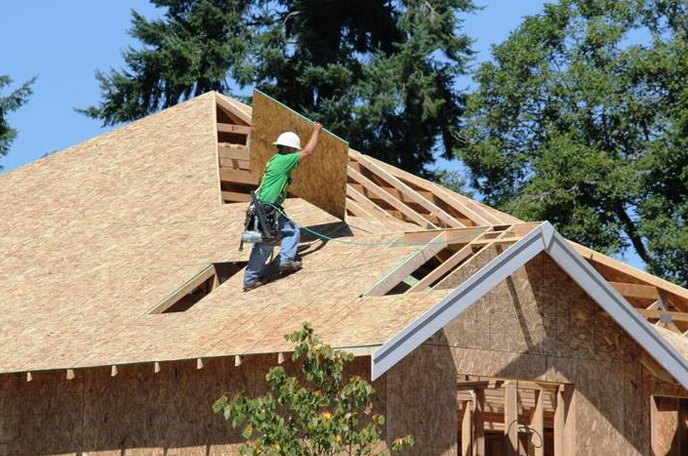
OSB 3
Thickness: 9, 12, 15, 18, 24mm
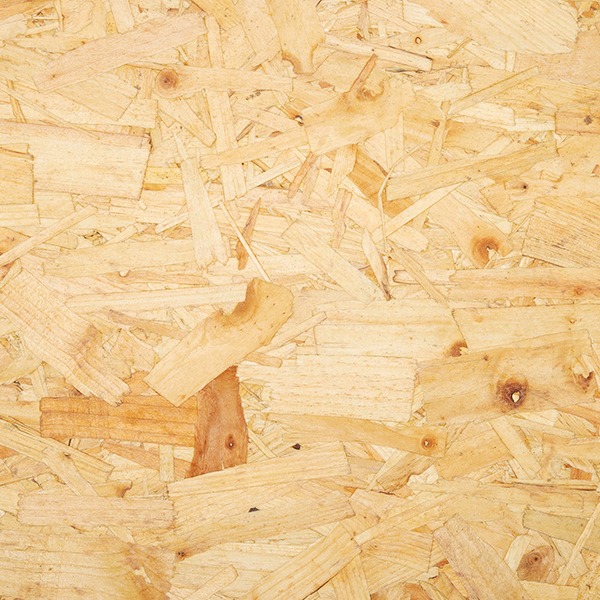
Has knots with in grain
Interior use
Shock-resistant
Has strong wood grain
Easy to work with
Shock-resistant
Description
Production Process
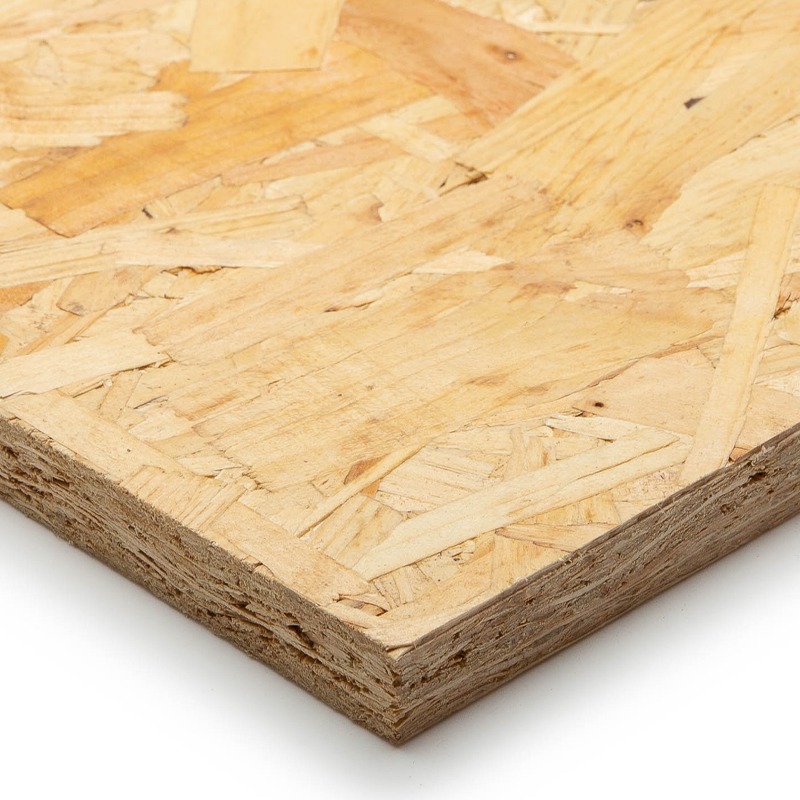
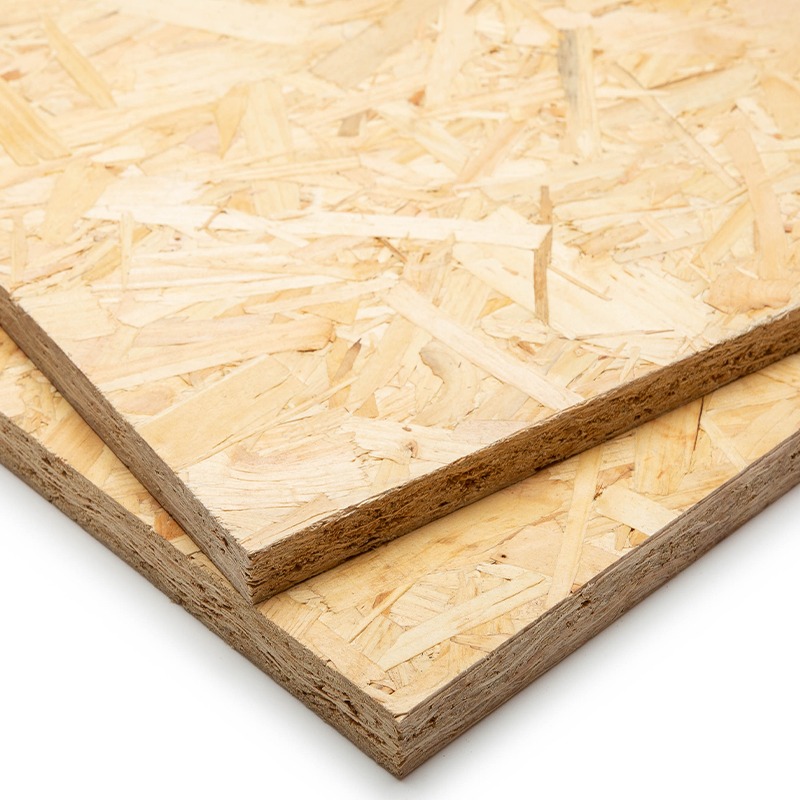
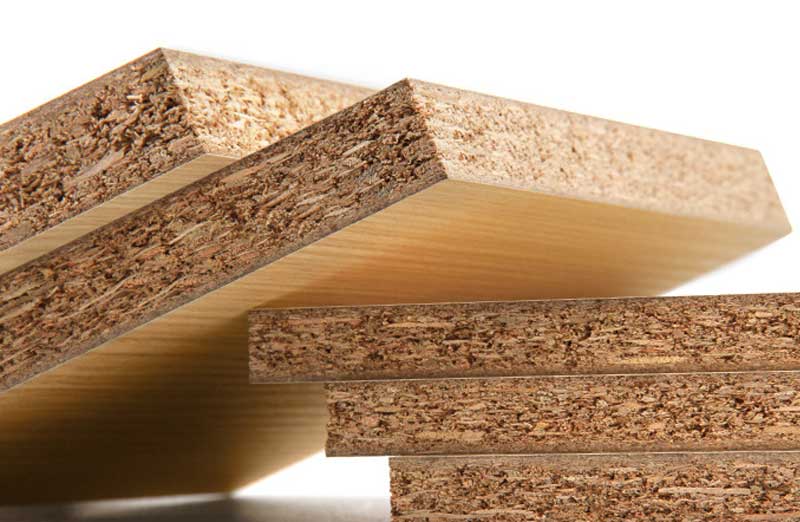
OSB sheeting is very similar to chipboard and also shares some similarities with plywood. An OSB sheet is created by arranging opposite-orientation strands of wood fibres at specific angles and combining them with strong glues, under heat and pressure. This precise manufacturing process results in an extremely strong sheet of wood meant for challenging applications and heavy-duty use. Other names for OSB include flakeboard or sterling board.
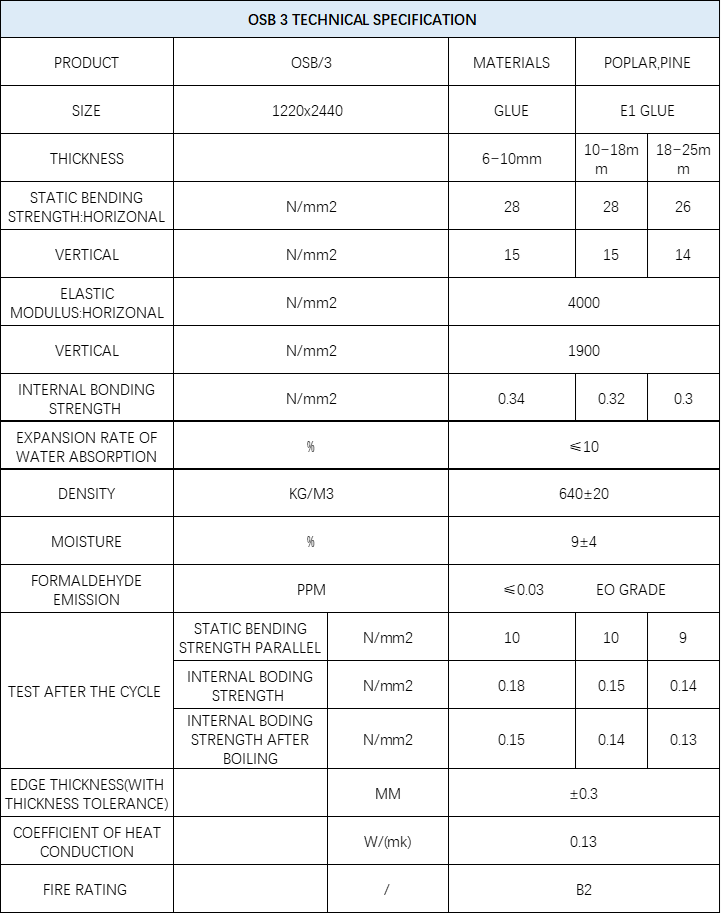
Specification
Q:What are the common applications of OSB 3
Common Applications of OSB 3:
- Roof decking
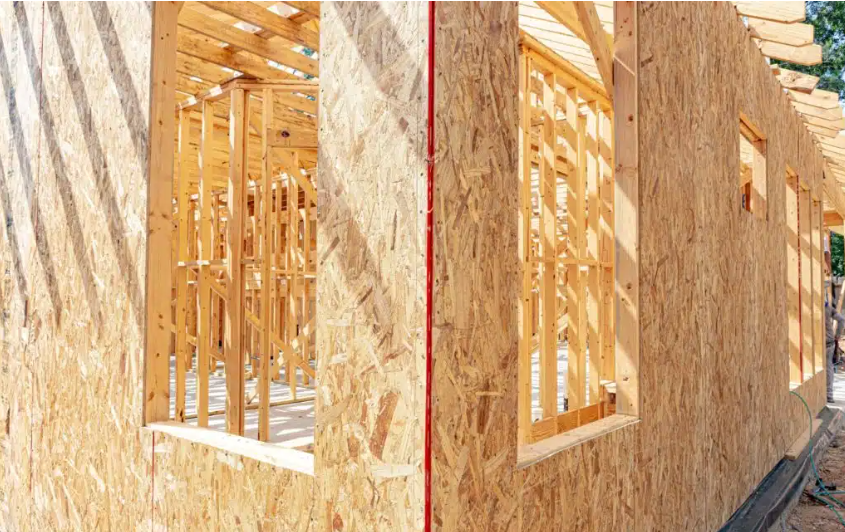
- Wall sheathing (exterior or interior)
- Subflooring
- Load-bearing walls
- Packaging for moist conditions
- Shed or garage walls and floors
- Site hoarding or temporary outdoor structures
It is suitable for both indoor and outdoor use, as long as it’s protected from direct water exposure (like rain).
Q: How to select the right OSB material for your project?
1. Will it be in a dry or wet place?
- If dry only → Go to step 2
- If wet or humid → Use OSB 3
2.Does it need to support weight (structural use)?
- If yes → Use OSB 2
- If no → Use OSB 1
3.Is the project very heavy-duty (like industrial flooring)?
- If yes → Use OSB 3